


Is Air Duct Cleaning Worth It in San Antonio? An Honest Assessment
Updated: 5 days ago
TL;DR — The Honest Answer
Air duct cleaning is not a routine maintenance item the way changing your AC filter is. The EPA says there is no blanket recommendation for or against it. That said, San Antonio's specific conditions - cedar pollen season, year-round HVAC use, high summer humidity with the AC unit and air ducts usually in the attic, and a large inventory of aging pre-2000 homes create legitimate trigger situations where professional cleaning delivers real value. If you recognize one or more of the seven signs in this post, air duct cleaning is genuinely worth it. If you don't, a good filter program and regular HVAC maintenance are the right move instead. The key is knowing which situation you are in - and avoiding the "$99 whole-house special" companies that will not tell you either way, instead will just try to up-sell you.
What the EPA Actually Says — Before Anyone Tries to Sell You Anything
🏛️ EPA Official Position — Indoor Air Quality Program
Should You Have the Air Ducts in Your Home Cleaned?
"Knowledge about the potential benefits and possible problems of air duct cleaning is limited. Since conditions in every home are different, it is impossible to generalize about whether or not air duct cleaning in your home would be beneficial."
The EPA's full guidance adds that "duct cleaning has never been shown to actually prevent health problems" (Compared to disinfecting and sanitize against bacteria and molds) and that studies do not conclusively show that dirty ducts raise dust levels in the home more than other sources. Their recommendation: clean ducts "only as needed" - not on a fixed schedule, and only when specific visible contamination conditions are present.
We are leading with this because we are the company you are considering hiring. You should know what the federal agency that studies indoor air quality says before you make a decision - and we would rather you make a well-informed choice than feel pushed into a service you don't need.
The EPA's caution does not mean duct cleaning is useless. It means "this is more complicated than a contractor's ad suggests," and that is exactly right. The honest answer is that air duct cleaning genuinely helps in some homes and makes little measurable difference in others - and the difference has to do with your home's specific conditions, not a calendar interval.

Why San Antonio's Conditions Change the Calculus
The EPA's guidance was written for the national average home in an average climate. San Antonio is not an average climate, and there are several factors specific to this market that push more homes into the "cleaning is warranted" column than the national average would suggest:
San Antonio-Specific Factors That Affect Your Ducts
🌿Cedar fever season (December–February): San Antonio's Ashe juniper trees produce up to 500 billion pollen grains per tree per season, with concentrations reaching 20,000–32,000 grains per cubic meter at peak. San Antonio runs heating during cedar season - HVAC systems actively pull outdoor air through return vents and recirculate it. Over a full cedar season, even a MERV 8 filter (70–80% capture efficiency for 3–10 µm particles) allows a measurable volume of pollen to bypass and accumulate in supply duct runs.
☀️Year-round HVAC operation: Unlike northern markets where systems run 4–5 months per year, San Antonio homeowners run air conditioning from April through October and heating from November through March, with minimal off-time in between. More operating hours = more air cycling = more accumulation over a given period.
💧Summer humidity and condensation: San Antonio's July–August dew points regularly reach 70°F+. Supply ducts running through unconditioned attic spaces can sweat on their exterior — and poorly sealed duct joints can allow humid attic air inside the duct. Moisture plus organic debris is the precondition for mold growth inside ductwork.
🏠Aging housing stock: A large share of San Antonio's residential inventory was built between 1970 and 1999 — homes now 25–55 years old with original ductwork that may never have been professionally cleaned, and insulation that has settled or been disturbed and contaminated by pest activity, home improvements, or the simple weight of time.
🔧The ever-lasting construction work: We, the people who live in San Antonio see the construction work going on all over city, for many years. A lot of the dust and debris from all the construction work gets into our houses, and circulates through the air system.
1. You can see visible dust or debris coming from supply registers when the system runs
The clearest possible signal. If you can see particles being pushed out of a vent when the air handler kicks on, there is enough buildup in the supply ducts to be releasing material into your living space. This is one of the EPA's three explicit triggers for cleaning.
2. You have had recent renovation or construction work inside the home
Drywall dust, insulation fibers, and construction debris are some of the most common duct contaminants. Even with supply vents taped during construction (best practice), return air penetrations often remain open. A post-renovation inspection and cleaning is one of the most clear-cut cases for the service.
3. You are moving into a home and don't know the duct history
You have no idea whether the previous owner had heavy pet traffic, smoked indoors, ran low-efficiency filters for years, or dealt with a pest problem. An inspection of the duct system before you move in - and cleaning if needed, is standard due diligence for new San Antonio homeowners, particularly in pre-2000 homes.
4. You have confirmed or suspect a pest infestation in or near the HVAC system
Rodents, roaches, and other pests in or near ductwork leave biological debris — droppings, nesting material, carcasses - that the HVAC system can distribute throughout the home. This is one of the EPA's three explicit cleaning triggers, and it requires cleaning after the pest problem is resolved, not before.
5. You can see or smell evidence of mold on vent covers or inside accessible duct sections
Dark spotting around supply vents, a musty smell from AC that is strongest when the AC runs, or visible mold growth inside a duct section you can inspect are all serious signals. Important: HVAC mold cleaning requires identifying and correcting the moisture source first. Cleaning without fixing the cause will result in recurrence. This is the third EPA explicit trigger. Any suspected mold should be confirmed by testing.
6. Allergy or respiratory symptoms that are consistently better when you leave the house
If your cedar fever symptoms, persistent cough, or unexplained respiratory irritation reliably improve when you go to work or visit another location for a few days, and worsen when you return home, your HVAC system is the logical suspect. An inspection is needed, though cleaning is the right step only if the inspection confirms duct contamination, not as a first-guess solution.
7. The system is 5+ years old and has never been professionally cleaned
NADCA recommends periodic inspection and cleaning based on system age, usage, and environment - not a fixed universal interval. A San Antonio home running HVAC year-round with any of the factors above (pets, allergies, cedar season, older construction) and no cleaning history in years is a reasonable candidate for an inspection, with cleaning performed if the inspection confirms buildup. The inspection should come first.

And When You Probably Don't Need It
✅ Clean your ducts if…
One or more triggers above apply
Visible dust from registers
Recent renovation or construction
Moving into an older home with unknown history
Confirmed pest activity in or near ducts
Visible mold or musty smell from vents
Symptoms better when away from home
10+ years without cleaning + year-round SA use
✗ Wait on cleaning if…
None of the triggers apply
Visual inspection of supply and return registers looks clean
System cleaned in the last 5 years with no new triggers
Legitimate air duct cleaning for a typical San Antonio home — 10 to 12 supply and return vents, accessible ductwork, standard system — runs approximately $400 to $600. Larger homes, harder-to-access ductwork in attics or crawl spaces, or systems requiring duct mold cleaning or duct repair / duct replacement cost more. Here is the breakdown:
Service Component | Typical Range | Notes |
Supply vent cleaning (per vent) | $35–$55 | Each supply register + duct run to the trunk line |
Return vent cleaning (per vent) | $45–$75 | Returns carry more debris; larger openings take more time |
Trunk line and main supply plenum | $100-$200 | The main duct runs; often priced separately |
Air handler / blower motor cleaning | $250–$350 | Blower wheel accumulates debris; directly affects efficiency |
$250–$350 | Needed if mold or biological contamination is confirmed | |
Whole-home total (10–12 vents, typical SA home) | $400–$800 | Depending on different services |
⚠️ Consumer Alert
"Blow-and-Go" Duct Cleaning Scams — Know the Signs
The Michigan Attorney General's office, citing NADCA guidance, issued a formal consumer alert about air duct cleaning scams that operate nationwide — including Texas. A "$99 whole-house cleaning" ad costs the company more in travel time than they will collect at that price. The actual business model is to arrive, claim to find problems that requires additional services, and charge several times the advertised price — or to do an inadequate "blow" job that does not clean the system properly and may blow debris from ducts onto your furniture and carpet.
🚩 Red Flags
Any "whole-house" cleaning under $350
Social media ads with no company name or address
New account, locked profile, or username that does not match company name
No mention of equipment used (just "professional cleaning")
Pressure to add deep cleaning because basic cleaning is not enough
No before-and-after documentation offered
Door-to-door sales or unsolicited messages
✅ Signs of a Legitimate Company
Cleans ducts with rotary brush
Uses truck-mounted or portable negative-pressure vacuum equipment
Itemized quote before work begins
Willing to show you the inside of a duct before cleaning
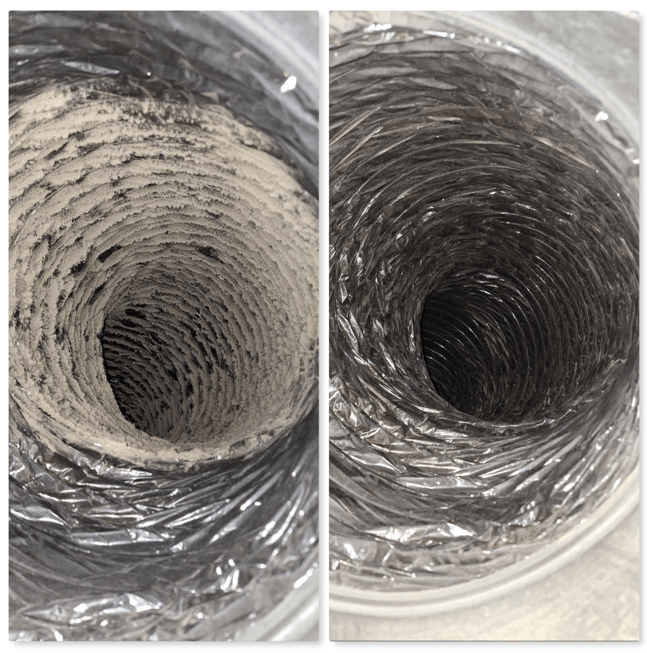
Provides before-and-after photos or video documentation
Physical San Antonio address, verifiable reviews on Google
No pressure to add services you did not ask about
A standard air duct cleaning for a San Antonio home takes approximately 3–5 hours for a typical system and follows a specific sequence. If a technician is done in 45 minutes, something was skipped:
🔍 Inspection before cleaning begins
A visual inspection of accessible duct sections establishes what is actually present - dust, mold, pest debris, structural damage - before any cleaning starts.
🌀 Negative pressure established throughout the system
A truck-mounted or powerful portable vacuum is connected to the main trunk line, putting the entire duct system under negative pressure. This ensures that dislodged debris is captured and collected - not blown out into the living space the way compressed air alone would do.
🧹 Each vent is agitated and cleaned individually
Technicians work through every supply and return register with brushes, air whips, or skipper balls to release debris from the duct walls while the negative pressure vacuum continuously removes it.
⚙️ Main supply box and blower components cleaned
The blower wheel area, evaporator coil area, and plenum box are cleaned - this is often where the most significant biological contamination (mold, mildew) develops in San Antonio's humid summers, and where cleaning delivers some of its highest efficiency benefit.
📷 Post-cleaning inspection and documentation
Before-and-after photos or video confirm what was found and what was removed. Any structural issues identified during cleaning (gaps, disconnected sections, collapsed flexible duct) are documented and quoted separately — not added on as surprise charges at the end of the job.
✅ NextGen's Commitment to Honest Duct Cleaning in San Antonio
We inspect before we clean - every time. We show you what is in your ducts before we start and document what we removed when we're done. We don't add anything without showing you, and we don't pressure you into services you did not ask about. If your ducts look clean on inspection and do not meet any of the cleaning triggers, we will tell you that and recommend a filter upgrade and UV Light air purifier installation instead. That approach has built our reputation across San Antonio, Stone Oak, Alamo Heights and Terrel Hills, Boerne,
Bee Cave, Fredericksburg, Wimberley, Lakeway, Helotes, Bandera, Alamo Ranch, Schertz, Cibolo, Canyon Lake, Floresville, La Vernia and New Braunfels, and the surrounding Hill Country corridor. See what our duct cleaning service includes →
Ready to Breathe Easier?
Call NextGen today at 210-744-0079 or email txnextgen@gmail.com for inspection and vent cleaning in San Antonio & Austin, TX.
Visit NextGen-TX.com to learn how we can restore your home or property’s air quality safely and effectively.
📍 Serving San Antonio & Austin, TX
📞 Call NextGen at 210-744-0079
NADCA recommends cleaning based on conditions, not on a fixed schedule. In San Antonio, the relevant conditions include: year-round HVAC operation (which accumulates debris faster than seasonal systems), cedar season pollen load (December–February), summer humidity and potential for moisture in attic-run ducts, and your home's specific history - pets, prior smoking, renovation history, pest issues. A practical approach for San Antonio: inspect at 2-3 year intervals if none of the specific trigger conditions apply, and clean when an inspection confirms buildup. If you have the trigger conditions (recent construction, known pest issue, unexplained symptoms), do not wait for the interval, inspect and clean now. See our HVAC Explained Blog for additional HVAC maintenance guidance →
Possibly, if pollen has accumulated in your supply duct runs and is being recirculated. Cedar pollen (Ashe juniper, Juniperus ashei) grains are 25–35 µm in diameter, which puts them in the range that MERV 8 filters (the most common installed in San Antonio homes) allow to partially bypass. Over a full cedar season, ducts can accumulate a meaningful load, particularly in return plenum sections and near the air handler where airflow slows. Duct cleaning for allergies after cedar season - ideally combined with a filter upgrade to MERV 11 or better and HVAC UV Light air purifier installation addresses both the accumulated pollen and the ongoing filter bypass problem, and the growth that brings more allergies. Cleaning your ducts without upgrading your filter will reduce the existing pollen load but will not prevent re-accumulation the following season. Ask us about a post-cedar-season duct cleaning →
In most cases, the pricing tells the story: a whole-home cleaning that costs under $350 for a typical San Antonio home cannot be done properly at that price. Legitimate cleaning takes 3–5 hours and costs $400–$800 depending on home size and system complexity. If a company offers a "$99 whole-house special" or a deeply discounted price over the phone without seeing the system, assume the real bill will be much higher, or the service will not be real. Call us for a quote before any work begins: 210-744-0079.
For more info, prices and FAQ's, visit our FAQ page.
Wondering if Your San Antonio Home's Ducts Need Cleaning?
We will inspect first and tell you honestly - clean if needed, pass if they are fine, and show you the evidence either way. No "$99 specials" with up-sell tactics, no surprise add-ons, no pressure. Just a straight answer about your specific system.
Or call 210-744-0079 — air duct cleaning in San Antonio, Austin, Stone Oak, Alamo Heights and Terrel Hills, Boerne, Bee Cave, Fredericksburg, Wimberley, Lakeway, Helotes, Bandera, Alamo Ranch, Schertz, Cibolo, Canyon Lake, Floresville,
La Vernia and New Braunfels. and surrounding communities.


Comments