


Air Duct Cleaning After Renovation in San Antonio: When You Need It, What It Costs, and How to Avoid It Next Time
TL;DR — The Quick Answer
Renovation dust is one of the few cases where even the EPA, which does not recommend routine duct cleaning, says duct cleaning is worth considering: when ducts are clogged with debris or dust, particles blow out of the registers. San Antonio AC's usually run through a remodel, so have the ducts, coil and blower inspected once all dusty work is done. A typical job runs $350–$800, and more with heavy contamination or construction dust.
The contractors are gone and the floors have been mopped twice. Two days later, a fine white film is back on the nightstand. That dust usually is not coming from the room. It's coming from the system that moves air through every room, which requires ventilation system cleaning.
Here is when air duct cleaning after a renovation is genuinely needed in San Antonio, when a new filter is enough, and what a proper job includes.

Air Duct Cleaning After a Renovation: Why the EPA Makes an Exception
Start with the most cautious source. The EPA does not recommend cleaning ducts on a schedule, and its guide Should You Have the Air Ducts in Your Home Cleaned? says there is no evidence that a light amount of household dust in ducts poses a health risk. The same guide lists three situations where cleaning is worth considering, and a dusty renovation falls squarely into one of them.
🏛️ What the EPA Actually Says
Consider having ducts cleaned if there is:
Substantial visible mold growth inside hard-surface ducts or system components
A rodent or insect infestation in the ducts
Ducts clogged with excessive dust and debris, or particles released from supply registers
For dusty construction, the EPA's prevention advice is to seal supply and return registers and not run the heating and cooling system until cleanup is done.
A few weeks of drywall sanding or tile demolition can release more fine dust than a household produces in years. That is why professional air duct cleaning after a dusty remodel is a different decision from routine service, which we cover in Is Air Duct Cleaning Worth It in San Antonio?
HVAC Cleaning After a Remodel: Why San Antonio's Year-Round AC Changes the Job
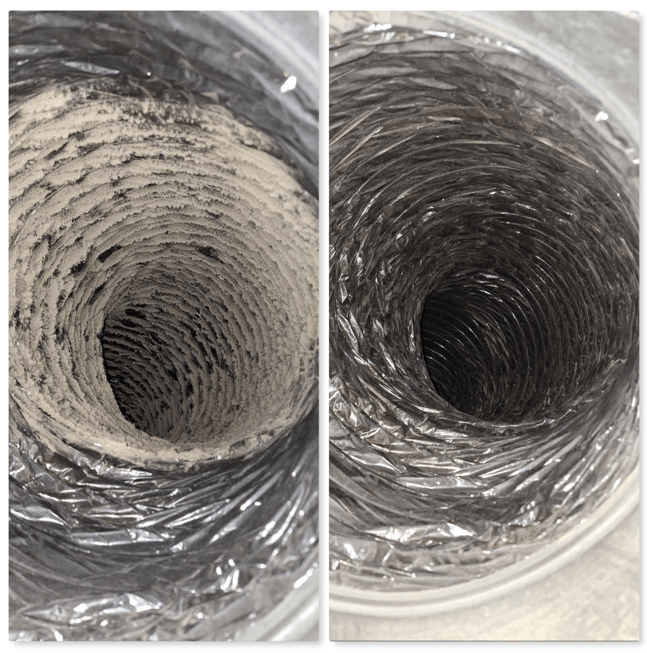
The EPA's advice assumes you can shut the system off during construction. In San Antonio however, the HVAC runs nearly year-round, and a July remodel with the air off is risky for kids, pets and older relatives. So the system runs, pulling air from the work zone and pushing whatever gets past the filter through the ducts and across the coil. And even in cases where the AC is not running while remodeling, we always see massive amounts of fine white dust (construction dust) inside the air ducts, inside the return ducts, and supply and return boxes. Always.
⚠️ If the AC Has to Run During Your Remodel
A practical compromise for Texas heat, not an EPA recommendation.
Cover every register in the work area with plastic and painter's tape.
Wall off the work zone with plastic sheeting.
Check the filter every few days during sanding or demolition, and replace it when it turns gray.
Never let anyone run the system without a filter.
Why humidity makes drywall dust a bigger problem here
July and August dew points here regularly reach 70°F or higher, so the evaporator coil stays wet for months. Dust that reaches a wet coil sticks, then washes into the drain pan, where it can clog the condensate line. With many San Antonio air handlers in the attic, that can end up as a stained ceiling. ENERGY STAR also notes that dirty coils make the system run longer, and that airflow problems can cut efficiency by up to 15 percent.
In our experience, it is VERY recommended to flush the drain line, clean the coils, the blower wheel and clean the air ducts after a dusty remodeling.

Not every project calls for duct cleaning. Use this as a starting point, not a substitute for inspection.
Project | What it releases | Duct risk | Next step |
Hanging and sanding drywall | Very fine gypsum dust | High | Inspect ducts, coil, blower |
Tile or flooring demolition, hardwood refinishing | Fine mineral dust, sawdust | High | Inspect; clean if dust is visible |
Kitchen or bathroom gut | Mixed debris; chips fall into floor registers | High | Inspect, including floor registers |
Attic insulation added | Fibers near attic ducts and returns | Moderate | Check attic duct connections |
Interior painting, no sanding | Minimal | Low | New filter; cleaning usually unnecessary |
Paint disturbed in a pre-1978 home | Possible lead dust | Special case | Lead testing first (see below) |
*General guide; results depend on containment, whether the system ran, and previous maintenance.
Older San Antonio Homes: Rule Out Lead and Asbestos First
A study for the city's Office of Historic Preservation found that 22% of San Antonio housing units were built before 1960. Those homes are the most likely to be renovated, and to contain lead paint or older materials.
Pre-1978 Homes: Read This First
Lead: For pre-1978 homes, the EPA recommends a lead-safe certified contractor and warns that even a small amount of lead dust can poison a child. Its lead-safe steps include covering duct openings in the work area. If that did not happen, get lead testing and cleanup before flex duct cleaning.
Asbestos: The EPA says duct cleaners should check for asbestos-containing materials, such as old duct insulation or register boots, before air duct cleaning and sanitization.
Timing: wait for the last dusty task
The most common mistake is cleaning too early. If any sanding is left, you will pay twice.
1. Finish dusty work - Including touch-up sanding.
2. Clean the house - Wipe surfaces, HEPA-vacuum.
3. New filter - Highest efficiency your system allows.
4. Inspect - Ducts, coil, blower, drain pan.
5. Clean - Only if contamination is shown.
6. Verify - Check the work before signing off.
The whole system, not just the vents
The EPA says duct cleaners should clean every component (ducts, registers, coil, drain pan, blower, air handler housing), since skipping one can recontaminate the rest. Equipment should exhaust outdoors or use HEPA filtration.
What duct cleaning in San Antonio typically costs
Benchmark | Range | Source |
What most U.S. homeowners pay (2026) | $350–$800 | |
Per heating and cooling system | $450–$1,000 | EPA |
Homes with two HVAC systems | Each system priced separately | EPA (prices quoted per system) |
"Whole-house" offers under $250 | Red flag |
For a typical San Antonio home, legitimate air duct cleaning runs about $350–$800. After a remodel, expect the higher end or the EPA's per-system band: the EPA lists contamination level as a cost factor, and heavy dust often means cleaning the coil and blower too. Be wary of $99 coupons; see 6 red flags of air duct cleaning scams.
How to check air ducts
Per the EPA's checklist, a flashlight should shine through the coil, the drain pan should drain, the blower should be clean, access holes should be sealed with more than duct tape, and every register should be firmly reattached.
We in NextGen, inspect first and show you what's in the ducts before any work starts, including the return side, coil, drain pan and blower. If the ducts look clean, we will say so and recommend a filter change instead. In a pre-1978 home with disturbed paint, we will recommend lead testing first. You get the full price before we begin. No bait-and-switch. No low offers just to get in the door and up-sell. See what our post-renovation duct cleaning includes →
📍 Serving San Antonio & Austin, TX
📞 Call NextGen at 210-744-0079
Not always. If the work was limited to painting, or the registers were sealed and the system stayed off, a fresh filter and HEPA vacuuming are often enough. Duct cleaning makes sense when the project involved drywall, demolition or sanding and the HVAC system ran while work was done, or when dust puffs from supply vents or a new filter turns gray within days. Those signs match the EPA's "excessive dust and debris" condition. Start with an inspection that shows you inside the ducts, coil and blower.
A typical San Antonio home runs about $350–$800. Post-renovation jobs land toward the top of that range, or in the EPA's $450–$1,000 per-system range, because heavy construction dust takes longer and often means cleaning the coil and blower as well. Homes with two systems pay for each. Get an estimate before work begins→.
Yes, It can hurt performance. Drywall dust slips past low-efficiency filters and coats the coil and blower. ENERGY STAR notes that dirty coils can make HVAC system run longer, and that airflow problems can cut efficiency by up to 15 percent. In humid San Antonio summers, dust on a wet coil can also wash into the drain pan and help clog the drain line. Frequent filter changes during the project, plus a coil and blower inspection after, are the minimum necessary.
For more info, prices and FAQ's, visit our FAQ page.
Finished Your Remodel? Let's Look Before You Pay.
We at NextGen will inspect your ducts, coil and blower and show you what we find, so you can decide whether cleaning is actually needed.
Or call 210-744-0079. Serving San Antonio, Stone Oak, Alamo Heights and Terrel Hills, Boerne, Bee Cave, Fredericksburg, Wimberley, Lakeway, Helotes, Bandera, Alamo Ranch, Schertz, Cibolo, Canyon Lake, Floresville, La Vernia and New Braunfels.
and surrounding communities and the surrounding Hill Country corridor.


Comments