


Cedar Fever and Air Ducts: Why San Antonio's HVAC Makes Allergy Season Worse
TL;DR — Quick Summary
Every December through February, the Hill Country's 35+ million tons of Ashe juniper release pollen clouds that regularly reach 20,000–32,000 grains per cubic meter in San Antonio - some of the highest pollen counts recorded anywhere in the world. When you seal yourself indoors, your HVAC system becomes the problem: it pulls cedar pollen in through gaps and return vents, traps it in accumulated air duct debris, and recirculates it through your home every time the heater or AC cycles. A MERV 8 or higher filter and a duct cleaning before or during cedar season are the two most effective steps for reducing indoor cedar exposure. This post explains exactly how the mechanism works and what to do about it.
Cedar fever season has a ritual to it in San Antonio. Sometime after Thanksgiving, a cold front rolls down from the Hill Country, and the next morning half the city is reaching for the Claritin. Eyes water. Noses run. People who swear they "never had allergies before" suddenly understand what all the fuss is about.
The standard advice is to stay inside. Close the windows. Run the AC. Avoid the pollen clouds drifting in from the Hill Country. And that advice is not wrong - but it is incomplete. Because for many San Antonio homeowners, the air ducts running through their walls and attic have spent months accumulating the very allergens that cedar season will now force your HVAC to recirculate, every single day, until February.
This post explains why that happens, how the mechanism works, and the two things that actually make a difference before mountain cedar peaks in mid-January.
Despite the name, cedar fever is not a fever, and Ashe juniper is not a true cedar. It's an allergic reaction to pollen from Juniperus ashei - commonly called mountain cedar, the dominant tree species across the Texas Hill Country west of Interstate 35. Unlike most trees, which pollinate in spring, male Ashe junipers release pollen in winter, beginning after the first significant cold fronts of late November and December, peaking in mid-January, and tapering off around Valentine's Day.

To understand how extreme these numbers are: most pollen types - oak, grass, ragweed - peak at hundreds to low thousands of grains per cubic meter in San Antonio. Cedar's scale runs from "high" starting at 500, to "very high" above 10,000, to readings in the 20,000–32,000 range on the worst January days. It is categorically different from any other local allergen, which is why people who have lived in San Antonio for years and managed spring allergies fine get completely blindsided the first time they are here for a full cedar season.

Here is what most articles on cedar fever miss: sealing yourself indoors does not protect you as effectively as it should, because most home HVAC systems are actively working against you in four separate ways.
01. Pollen Enters Through Return Vents and Gaps
Your HVAC pulls air from the home through return vents to condition it. These vents are rarely airtight, and the air ducts behind them often has gaps, poorly sealed joints, and penetrations in attic areas directly exposed to outdoor air. During cedar season, outdoor air seeping through these gaps carries pollen directly into your duct system before your filter ever sees it.
02. Pollen Travels In on People, Pets, and Clothing
Cedar pollen is extraordinarily sticky. It adheres to hair, skin, clothing, and pet fur, and rides indoors with everyone who enters the house. Once inside, pollen particles settle on surfaces - including your return vents, where the HVAC pulls them in and distributes them through the duct system.
03. Duct Debris Stores Allergens Season After Season
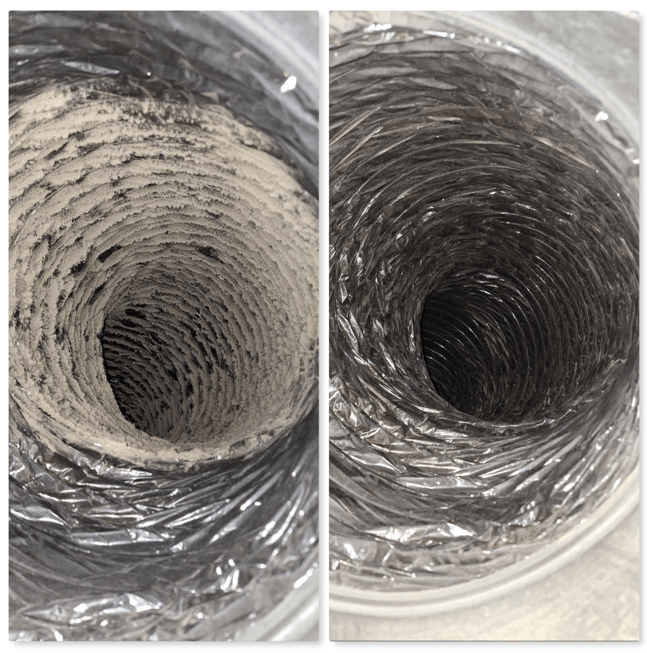
Air ducts accumulate dust, dander, and pollen over months and years. Every cedar season adds a new layer of allergen-rich debris that settles on air duct surfaces and in the bends of the air ducts. When the heater or AC kicks on, that settled debris goes airborne again and recirculates through every room in the house through the air ducts - including the allergens deposited in previous cedar seasons.
04. Undersized Filters Let Pollen Pass Straight Through
Cedar pollen particles average about 25 micrometers in size - large enough that a good filter captures them, but only if you have a good filter. The paper 1-inch filters that come standard in many San Antonio homes (MERV 1–4) capture less than 20% of particles in the 3–10 µm range - far too low to meaningfully reduce cedar pollen levels in air ducts. Most pollen passes straight through and back into the living space.
"Most home heating and cooling systems do not mechanically bring in fresh outdoor air — they recirculate the same indoor air, conditioning it for temperature." — U.S. Environmental Protection Agency, Indoor Air Quality Guide
The EPA notes that indoor air can be more polluted than outdoor air in even the most industrialized cities, and that contaminated HVAC systems and air ducts become vectors for distributing biological contaminants throughout the home's air ducts. During cedar season, when outdoor pollen levels are astronomical, an HVAC system running through debris-filled ducts with an undersized filter is not protecting you - it is concentrating and redistributing the problem. This is a big reason why our phone keeps ringing during those peak months, many people are requiring air duct cleaning and air duct deodorizing, to clean ventilation system from all the pollen. Commercial air duct cleaning in San Antonio and Boerne is also very meaningful for commercial buildings during those months, as many workers and occupants are suffering from severe allergy symptoms inside the buildings, affecting badly on their productivity.

SThe MERV Filter Problem — Why Your Current Filter May Be Doing Almost Nothing
MERV stands for Minimum Efficiency Reporting Value - a standardized rating from 1 to 16 that measures how effectively a filter captures airborne particles of different sizes. The EPA recommends upgrading to at least MERV 13 for residential systems where the equipment can handle it. Here is what different ratings actually mean for cedar pollen capture:
MERV Rating | Common Filter Type | Pollen Capture Rate (3–10 µm particles) | Cedar Season Effectiveness |
MERV 1–4 | Fiberglass, flat-panel | Under 20% | ❌ Essentially none - most pollen passes through |
MERV 5–7 | Basic pleated | 20–50% | ⚠️ Marginal - captures some pollen, misses much |
MERV 8–10 | Quality pleated | 70–80% | ✅ Good - captures most cedar pollen particles |
MERV 11–13 | High-efficiency pleated | Over 85% | ✅✅ Best for allergy sufferers without HEPA |
MERV 14–16 / HEPA | Hospital-grade | 95–99.97% | ✅✅✅ Excellent - not compatible with all systems |
Note: Higher-MERV filters restrict airflow more. Always check your HVAC manufacturer specifications before upgrading. An HVAC technician can advise on the highest MERV rating your specific system can handle without reducing airflow to the point of damaging the blower motor.
Cedar pollen particles average about 25 micrometers - well within the range that a MERV 8 filter captures at 70–80% efficiency. If you are running a MERV 4 or lower, you are essentially running no pollen filtration at all. Upgrading to a MERV 8 or higher before cedar season is one of the highest-impact, lowest-cost interventions available. A good MERV 11 filter costs $15–$25 and should be replaced monthly during peak cedar season rather than the standard 90-day interval.
✅ Cedar Season HVAC Checklist — Do These Before January
✓ Upgrade your filter to MERV 8 or higher. Check your HVAC system's owner manual for the maximum MERV rating it can support. Most residential systems handle MERV 11 without airflow issues; some can handle MERV 13. Buy several, you will change it monthly during peak season.
✓ Schedule an air duct cleaning and air duct disinfecting. If your ducts have not been professionally cleaned in the last 3–5 years, they have accumulated allergen-rich debris from previous cedar seasons that will recirculate the moment your heater runs. A professional air duct cleaning and disinfecting/sanitizing in San Antonio removes the stored reservoir of pollen, dander, dust, and mold in air ducts that undersized filters left behind.
✓ Seal obvious duct gaps and return vent gaps. Look at the return vents in your home (usually large, louvered grills on walls or ceilings). If there are gaps around the frame where the vent meets the wall, seal them with mastic or foil tape. Gaps in air ducts running through the attic allow unfiltered attic air - loaded with cedar pollen during season to enter the HVAC ventilation system.
✓ Change the filter immediately when cedar season starts. Even a brand-new filter needs changing earlier than usual during peak cedar season. If the filter looks visibly dirty or discolored, typically golden-brown from cedar pollen, change it regardless of how many days it has been in service.
✓ Remove shoes and outer layers at the door. Cedar pollen clings to clothing and hair. Leaving shoes at the entrance and changing into indoor clothes after coming in from outside is one of the most effective ways to reduce the pollen load entering your HVAC system through return vents. We offer HVAC Ventilation cleaning in San Antonio and Austin.
⏰ The timing matters: Cedar season in San Antonio begins building in late November and peaks in mid-January. If you are planning an air duct cleaning, scheduling it for October or November, before the season starts means your ducts are clear when pollen counts begin rising. Duct cleaning in March, after the season ends, removes the pollen but you have already breathed it. Pre-season timing is the key difference between a duct cleaning that actually helps with cedar fever and one that is just good maintenance.
Here is what makes the San Antonio situation different from most of the country: your HVAC ventilation system runs essentially every month of the year. Spring oak pollen, summer humidity and mold, fall ragweed, winter cedar - your ducts accumulate allergens across all four seasons without a meaningful break. In a city with a true winter, homeowners might run the heat for 3–4 months and the AC for another 4–5 months, with gaps in between. In San Antonio, the AC might run through October, the heat kicks on in November, and by the time cedar season peaks in January, those ducts have been continuously moving air — and accumulating debris — since the previous winter. This is one of the reasons why air duct cleaning and disinfecting in San Antonio is very important all year round.
That continuous operation of the home ventilation system means allergen buildup is faster and deeper than in most climates. It also means that the first truly cold day of the year - when the heat kicks on after a few weeks off in late October or November is often when settled debris in the ducts goes airborne for the first time. If you have noticed that your allergies get worse right when you first run the heat in fall, this is exactly why.
Schedule your duct cleaning and sanitizing in San Antonio to make sure you and your family will breath better.
✅ How NextGen Approaches Cedar Season Duct Cleaning
We schedule duct cleanings and inspections throughout the year in San Antonio, but we always recommend that homeowners with known cedar fever allergies schedule their service in October or November — before season. During a cleaning, we remove accumulated pollen, dust, dander, and debris from duct surfaces, supply and return lines, and the area around the blower. We also inspect for gaps and unsealed joints that allow unfiltered attic air into the ventilation system during cedar season. We give you an upfront price before we start with no adjustments once we start deep cleaning air ducts, We do not use the bait-and-switch duct cleaning method. Learn about our HVAC duct cleaning service in San Antonio →
🔧 Ready to Start Breathing Better?
Call NextGen today at 210-744-0079 or email txnextgen@gmail.com for air vents cleaning and sanitizing in San Antonio & Austin, TX.
Visit NextGen-TX.com to learn how we can restore your home or property’s efficiency and comfort.
📍 Serving San Antonio & Austin, TX
📞 Call NextGen at 210-744-0079
Q1. Does air duct cleaning actually reduce cedar fever symptoms indoors?
Professional duct cleaning and sanitizing removes the reservoir of accumulated allergens - pollen, dust, dander, mold spores from duct surfaces and the debris that settles in the bends and joints of your ductwork. For homeowners with significant duct buildup, the reduction in recirculated allergen load during cedar season is real and measurable in terms of symptom severity. However, duct cleaning alone is not a complete solution, it works best when combined with air duct disinfecting and a MERV 8 or higher filter, filter changes every 30 days during peak cedar season, and steps to reduce the pollen you bring in on clothing and shoes. Think of duct cleaning as emptying the reservoir; the filter is what keeps it from refilling. Learn more about our duct cleaning and sanitizing process →
For most San Antonio homes, a MERV 11 filter strikes the best balance between pollen capture efficiency and system compatibility. It captures over 85% of particles in the size range that includes cedar pollen (averaging ~25 micrometers), without restricting airflow enough to strain most residential HVAC blower motors. If you have significant allergy symptoms or a family member with asthma, ask an HVAC technician whether your system can support MERV 13 - the level recommended by the EPA for best allergen capture. Avoid MERV 14+ and HEPA media filters unless your system is specifically designed for that restriction level. Change whichever filter you choose every 30 days during peak cedar season (December–February) rather than the standard 90-day interval. See our full HVAC FAQ →
The clearest indicators that your ductwork has significant debris accumulation: visible dust puffing from supply vents when the system starts, a musty or dusty odor from vents when the heat first runs in fall, visible debris around return vent grilles, or consistently worsening indoor allergy symptoms even with a new filter installed. As a general guideline, ducts in San Antonio homes that run year-round should be inspected every 1–2 years, and more frequently in homes with pets, smokers, or occupants with significant allergies. If you have never had your ducts cleaned since moving in, and the home is more than 5 years old, there is almost certainly meaningful debris accumulation. Call 210-744-0079 for a free assessment — we will tell you honestly whether cleaning is needed before scheduling anything.
For more info, prices and FAQ's, visit our FAQ page.
Don't Go Into Cedar Season with Dirty Ducts.
NextGen cleans and sanitize air ducts throughout San Antonio, Austin, Stone Oak, Alamo Heights and Terrel Hills, Boerne, Bee Cave, Fredericksburg, Wimberley, Lakeway, Helotes, Bandera, Alamo Ranch, Schertz, Cibolo, Canyon Lake, Floresville,
La Vernia and New Braunfels. and surrounding communities.
Pre-season duct inspection and cleaning available now before the first January pollen peak.
Or call 210-744-0079 — we will assess whether cleaning is warranted and give you a price before we start.


Comments