


Why Your Home Won’t Stay Warm (or Cool) – Attic Insulation Fixes That Work
Updated: Sep 7
Ever wonder why your home never feels quite right—too hot in summer, too chilly in winter—even though your HVAC runs nonstop?The answer may not be your thermostat or air ducts, but your insulation.

According to the U.S. Department of Energy (DOE), homeowners can lose up to 25% of their heating and cooling energy through uninsulated or poorly insulated attics and walls. In San Antonio and Austin, where temperatures swing from scorching summers to chilly nights, that energy loss hits both your comfort and your wallet.
That’s where a proper insulation upgrade changes everything. Quality insulation keeps your home’s temperature consistent, cuts energy costs, and improves overall air quality. It’s not just about comfort—it’s about home efficiency and long-term savings.
At NextGen, we’ve helped hundreds of Texas homeowners transform drafty, inefficient spaces into energy-smart homes that stay comfortable year-round. Whether you’re dealing with high utility bills, inconsistent airflow, or an attic that feels like an oven, understanding how insulation works is the first step toward real, lasting comfort.

💡 “Proper insulation can save homeowners up to 15% on heating and cooling costs each year.”
— U.S. Department of Energy (energy.gov).
Why Poor Insulation Costs You Comfort and Money
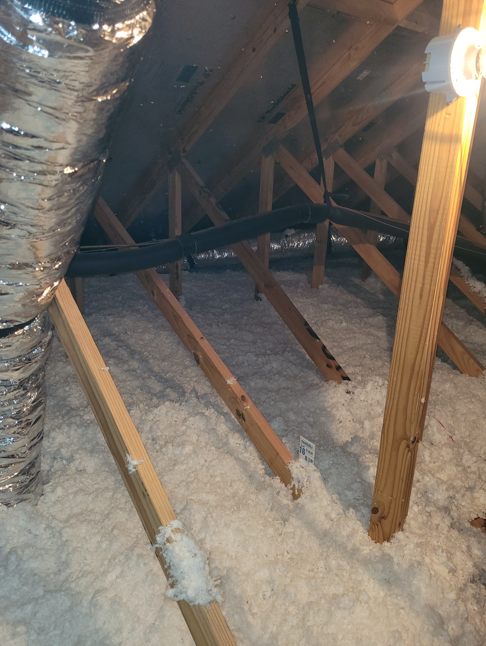
If your home feels drafty in winter or impossible to cool in summer, you’re not alone. Many homes in San Antonio and Austin—especially those built more than a decade ago—have insulation that’s either degraded, insufficient, or improperly installed.
That means your HVAC system works overtime trying to balance indoor temperatures, but most of that conditioned air escapes through gaps, ceilings, and poorly sealed attics.
According to the University of Minnesota’s Center for Sustainable Building Research, even small gaps in insulation can reduce its effectiveness dramatically, leading to significant increases in heating and cooling loads. Over time, that extra strain shortens your HVAC system’s lifespan and drives utility bills higher.
But the cost isn’t just financial. Poor insulation can also:
Allow moisture buildup, leading to mold or mildew growth.
Cause uneven airflow that leaves some rooms too hot and others too cold.
Worsen indoor air quality, trapping allergens, dust, and pollutants.
In a region like Central Texas—where humidity and temperature fluctuations are constant—those problems can quickly compound, turning small inefficiencies into serious comfort issues.
That’s why homeowners who take the time to assess and upgrade insulation often see immediate results: cleaner air, quieter rooms, and lower energy bills within the first month.
⚙️ Quick Tip:If your home’s insulation is more than 10–15 years old, it’s worth scheduling an inspection. Materials settle and lose efficiency over time, especially in Texas heat.
❓ Frequently Asked Questions
Q1: How to Improve Home Insulation?
Upgrade Your Attic Insulation.
Seal Air Leaks Throughout the Home.
Improve Wall Insulation.
Improve Duct Insulation & Sealing.
Improve HVAC Airflow & Filtration.
Q2: How Much Home Insulation Cost?
Insulation generally costs $1.75–$4.50 per sq ft installed. HomeGuide
Average total for insulating a house can fall between $1,600 and $8,000, depending on material and R-Value.
Attic insulation typically costs $1.75–$4 per sq ft, but spray foam can run $3–$7/sq ft.
Wall insulation (for 2x4 walls) is often $0.75/sq ft for batts on the low end, up to $1.90+ depending on material.
Q3: What Is The Best Insulation For A Home?
For a budget-friendly, widely used option: Fiberglass batts
For air sealing and maximum energy efficiency (especially in tight or weird spaces): Closed-cell spray foam
For eco-friendliness or retrofits: Blown-in cellulose
For exterior insulation or basement walls: Rigid foam board.
Home Insulation Company San Antonio, Austin.
Call 210-744-0079 or fill out the contact form here.
We also serve Stone Oak, Alamo Heights, Boerne, Bee Cave, Fredericksburg,


Comments