


How Heating Systems Work (Furnaces, Heat Pumps & More)
Updated: Sep 9
Understanding Your Home’s Heating System
When temperatures drop in San Antonio and Austin, TX, most homeowners simply adjust the thermostat and expect warm air to flow. But behind that comfort is a carefully engineered system designed to safely generate and distribute heat.
Heating systems are a major contributor to household energy use.
According to the U.S. Department of Energy (DOE), heating accounts for roughly 29% of energy consumption in U.S. homes on average. Understanding how your heating system works can help you improve efficiency, prevent breakdowns, and protect indoor air quality.
Let’s break it down in simple terms.
The Two Most Common Heating Systems in Texas Homes
In Central Texas, most homes use either:
Gas furnaces
Heat pumps
Each operates differently but serves the same purpose: safely warm your indoor air.
How a Gas Furnace Works
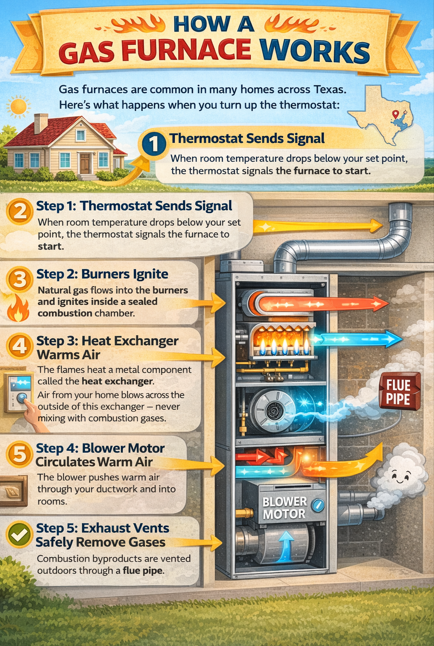
Gas furnaces are common in many homes across Texas. Here’s what happens when you turn up the thermostat:
Step 1: Thermostat Sends Signal
When room temperature drops below your set point, the thermostat signals the furnace to start.
Step 2: Burners Ignite
Natural gas flows into the burners and ignites inside a sealed combustion chamber.
Step 3: Heat Exchanger Warms Air
The flames heat a metal component called the heat exchanger. Air from your home blows across the outside of this exchanger — never mixing with combustion gases.
Step 4: Blower Motor Circulates Warm Air
The blower pushes warm air through your ductwork and into rooms.
Step 5: Exhaust Vents Safely Remove Gases
Combustion byproducts are vented outdoors through a flue pipe.
Why the Heat Exchanger Is Critical
The heat exchanger is one of the most important safety components. A cracked heat exchanger can allow carbon monoxide leakage.
The Consumer Product Safety Commission (CPSC) warns that improper furnace maintenance increases carbon monoxide risk. This is why professional HVAC maintenance inspections are essential each heating season.
How Heat Pumps Work (Heating Without Burning Fuel)
Heat pumps are increasingly popular in Austin and San Antonio due to mild winters.
Unlike furnaces, heat pumps do not create heat — they move heat.
Step 1: Extract Heat from Outdoor Air
Even in cool temperatures, outdoor air contains heat energy. A refrigerant absorbs that heat.
Step 2: Compressor Increases Temperature
The refrigerant is compressed, raising its temperature.
Step 3: Indoor Coil Releases Heat
The heated refrigerant passes through the indoor coil, releasing warm air into the duct system.
Step 4: Cycle Repeats
According to the DOE, heat pumps can deliver up to three times more heating energy than the electrical energy they consume under ideal conditions.³
This efficiency makes them a strong option for Texas climates.
How Heating Connects to Your Duct System
Regardless of furnace or heat pump, your ductwork distributes warm air throughout the home.
If ducts are:
Leaking
Dirty
Poorly insulated
Your heating system must work harder.
The DOE estimates that duct losses can reduce efficiency by up to 20% or more in some homes.
This is why professional air duct cleaning and duct inspections can improve airflow, comfort, and system longevity.
Heating & Indoor Air Quality
Heating systems impact more than temperature.
They influence:
Air circulation
Humidity levels
Dust movement
Allergen distribution
According to the Environmental Protection Agency (EPA), indoor air can be 2–5 times more polluted than outdoor air in some environments. Proper filtration, duct cleanliness, and ventilation matter.
Some homeowners add:
High-efficiency filters
Whole-home air purification
UV light systems inside HVAC units to reduce microbial growth on coils
The ASHRAE organization supports layered indoor air quality strategies including ventilation and air cleaning technologies.
Common Heating Problems Explained Simply
Uneven Heating
May indicate duct leaks or airflow restrictions.
Short Cycling
System turns on and off frequently — often caused by oversized equipment or airflow issues.
Rising Energy Bills
Can signal dirty components, aging equipment, or lack of maintenance.
Strange Smells
Burning dust smell is normal briefly. Persistent odors may require inspection.
Why Annual Heating Maintenance Is Essential
Before winter, professional service should include:
Inspecting heat exchanger
Checking gas pressure
Testing safety controls
Cleaning burners
Inspecting duct airflow
Verifying thermostat calibration
Preventive maintenance reduces breakdown risk and extends equipment life.
📍 Serving San Antonio & Austin, TX
📞 Call NextGen at 210-744-0079
❓ Frequently Asked Questions – Heating Systems Explained
Q1: Is a heat pump better than a furnace in Texas?
Heat pumps are highly efficient in mild winters like Austin and San Antonio. Furnaces may provide stronger heating during rare cold snaps.
Q2: How often should my heating system be serviced?
At least once per year before heating season begins.
Q3: Can dirty ducts affect heating performance?
Yes. Blocked or dirty ducts restrict airflow and reduce efficiency.
Q4: Does heating affect indoor air quality?
Yes. Heating systems circulate air throughout your home, which can distribute dust or allergens like mold if filtration and maintenance are neglected.
For more info, prices and FAQ's, visit our FAQ page.
Call 210-744-0079 or fill out the contact form here.
We also serve Stone Oak, Alamo Heights, Boerne, Bee Cave, Fredericksburg,


Comments